
Best Glamping Pods for Rainy British Weather
Sep 21,2018 - Sports

Every gambler has heard the phrase "the house always wins." It's true in a literal, mathematical sense — every casino game is built on a house edge that guarantees the operator a profit over time. But that doesn't mean players can't win. It means the game is designed so that most players lose most of the time. The gap between the two is where skill, discipline, and a little homework separate the people who treat gambling as entertainment from the people who treat it as a slow leak in their bank account.
Let's dig into what actually matters if you want to play slots, poker, and sports betting without donating your paycheck to the casino's quarterly earnings report.
The house edge is the single most important number in iGaming. It's the percentage of every dollar wagered that the casino expects to keep over the long run. Here's how that looks across the most popular games:
That spread is enormous. A player who spends an evening at a European roulette table is giving the casino roughly half of what a player at an American table gives. Over hundreds of spins, that difference is your entire entertainment budget. If you're going to gamble anyway, at least gamble on the games that keep more of your money in play. Many readers start with สล็อต when comparing options.
Slots are the wild card. The advertised RTP (return to player) is the inverse of house edge, but it's calculated over millions of spins — not your 200-spin session on a Tuesday night. A 96% RTP machine can absolutely eat your $100 in twenty minutes. The RTP matters for choosing which slot to play; it doesn't promise you anything about today.
Newer slot players obsess over RTP and ignore volatility, which is a mistake. Volatility describes how the payouts are distributed. A low-volatility slot pays small amounts frequently, keeping your balance relatively steady. A high-volatility slot like Money Train 2 or San Quentin can go 300 spins without a meaningful hit, then dump 5,000x your stake in one bonus round. Neither is "better" — they're different products.
Pick based on your bankroll and temperament:
One tip most players miss: max bet often matters more than RTP on modern megaways-style slots. Some games only unlock their full payout potential (or specific bonus mechanics) when you're playing max lines. Read the paytable instead of assuming the top prize is achievable at minimum stake.
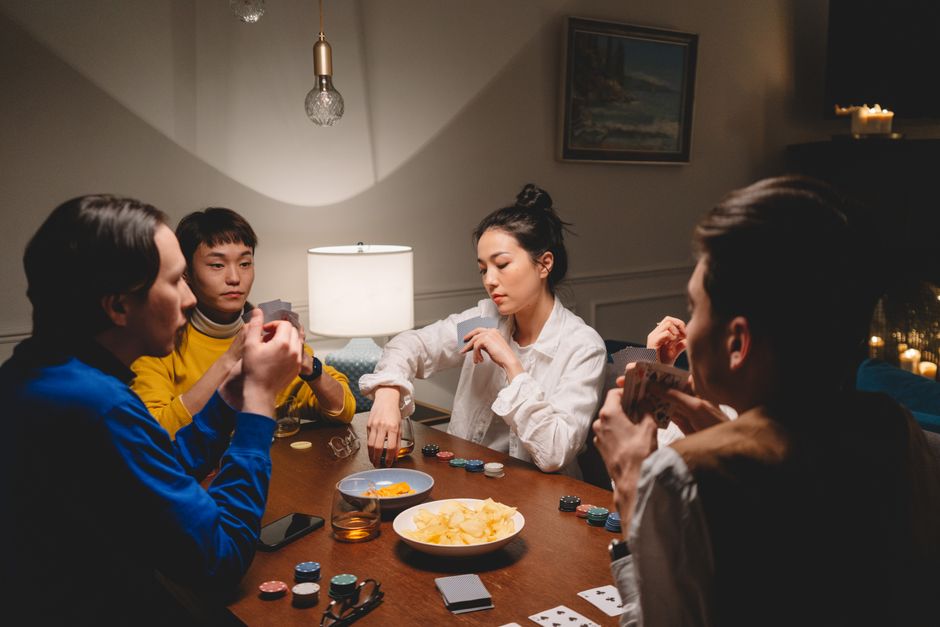
Poker is the one game on this list where a disciplined player can have a genuine positive expectation against weaker opponents. The house doesn't play against you — it just takes a rake. That rake (typically 5% capped at $3 in live $1/$2 games, or higher as a percentage online) is the only structural cost you face.
What beats most players isn't bad luck. It's bad habits:
The fix is unglamorous. Tighten your opening ranges. Learn one or two solid preflop charts. Track your results over at least 10,000 hands — anything less is noise. Variance in no-limit hold'em is brutal enough that a winning player can lose for months. If you can't stomach that, cash games will break you emotionally before they break you financially.
Sports betting is where the most otherwise-rational people lose the most money, because it feels like knowledge. You watch football. You know the teams. Surely you can predict the outcome, right?
The market already knows what you know. A point spread isn't a prediction — it's a price designed to split public money roughly evenly. To beat it, you need either information the market doesn't have or a systematic approach:
Also, be honest about why you're betting. Entertainment and profit are different goals, and mixing them is how bankrolls disappear.
Ask ten gamblers what their bankroll management plan is and nine will describe a feeling. The tenth will have actual numbers. Here's what works:
The uncomfortable truth is that most losses come from chasing, not from variance. You lose the first 20% of your bankroll to bad luck and the next 40% to bad decisions.
The most profitable gamblers are not the ones who hit the biggest jackpots. They're the ones who play small edges repeatedly, avoid the -20% EV traps, and treat the whole thing like a part-time job with strict accounting. That's not exciting, and the casinos know it. They build their floors around flashing lights and near-misses precisely because their math depends on you playing emotionally.
So here's the real advice: pick games with a low house edge, treat slots like the lottery tickets they are, play poker with ranges instead of feelings, line shop your bets, and never wager money you can't afford to lose without a flinch. Do that and you might not beat the house — but you'll at least stop being the reason it wins.
Sep 21,2018 - Sports
Sep 21,2018 - Sports
Sep 21,2018 - Sports
Copyright © 2026 The Swift Lodge. All rights reserved.The Swift Lodge. All Right Reserved.
 Emily Hartley

John Doe - 20 November 2026
The Swift Lodge We spend our time finding what works so you don't have to, and sharing exactly what made the difference.
John Doe - 29 july 2018
The Swift Lodge Real stories, useful guides and the occasional recommendation, all in one calm corner of the web.
John Doe - 29 july 2018
The Swift Lodge Simple, genuine and looked after with care — the kind of place worth returning to.
John Doe - 29 july 2018
The Swift Lodge Real stories, useful guides and the occasional recommendation, all in one calm corner of the web.